
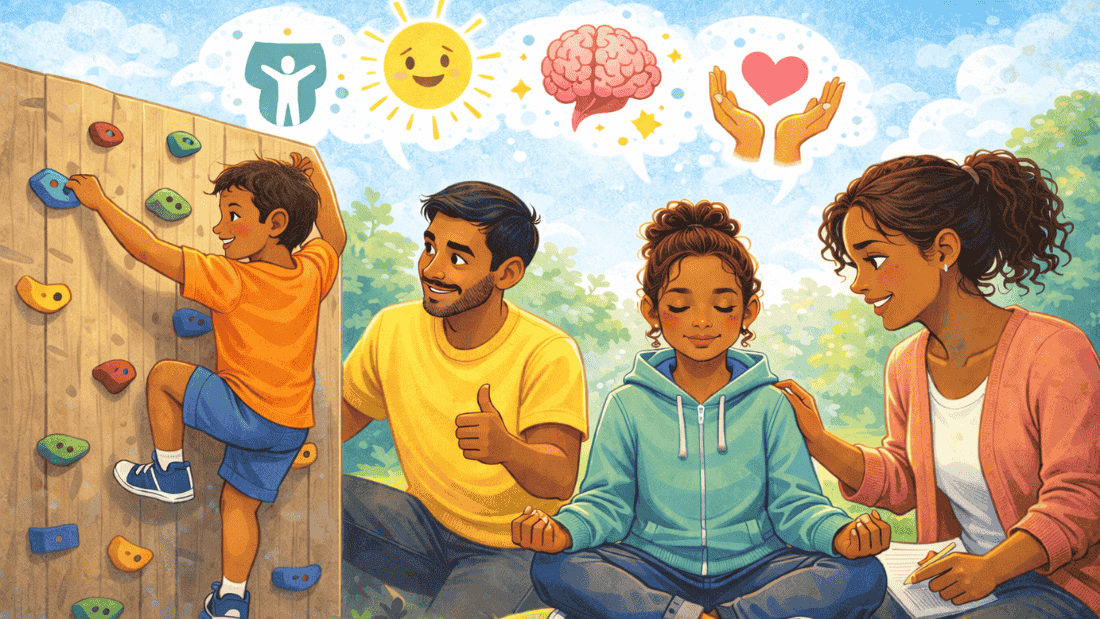
Resilience is not about avoiding hardship, it’s about learning how to navigate challenges with emotional strength and flexibility. Children and teens can develop resilience with the right support.
What Is Resilience?
Resilience is the ability to:
- Adapt to stress
- Recover from setbacks
- Regulate emotions
- Maintain hope and confidence
These skills are learned, not innate.
Why Resilience Matters in Youth Mental Health
Resilient children are more likely to:
- Manage anxiety and stress
- Recover from emotional setbacks
- Develop healthy relationships
- Maintain positive self-esteem
Resilience acts as a protective factor against anxiety, depression, and burnout.
How Parents Can Help Build Resilience
- Allow age-appropriate challenges
- Normalize mistakes and setbacks
- Teach problem-solving skills
- Encourage emotional expression
- Model coping strategies
A child psychiatrist can help identify emotional barriers to resilience and support skill development when children feel stuck or overwhelmed.
Long-Term Impact of Resilience
Children who develop resilience are better equipped to handle life’s inevitable challenges – both emotionally and socially.
Resilience is one of the most powerful gifts parents can help their children develop, and it lasts a lifetime.





Leave A Comment