
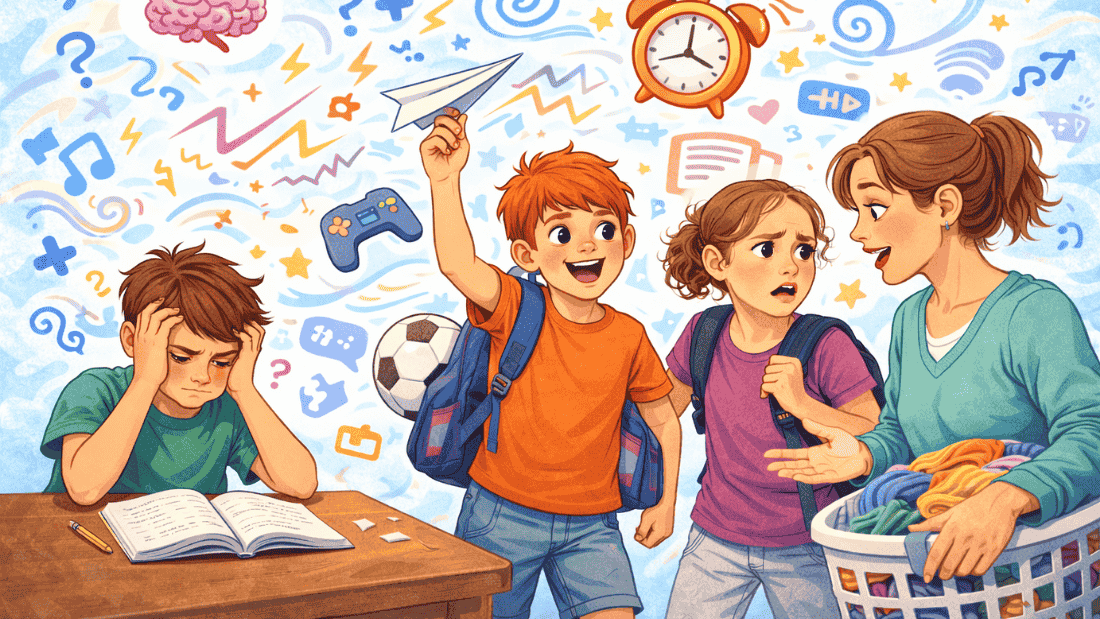
ADHD is often misunderstood as simply a problem with focus or behavior. In reality, Attention-Deficit/Hyperactivity Disorder affects emotional regulation, executive functioning, self-esteem, and daily life – especially as children grow into adolescence.
What ADHD Really Looks Like
ADHD may present differently depending on age and individual temperament. Common signs include:
In children:
- Difficulty following instructions
- Forgetfulness
- Emotional outbursts
- Trouble transitioning between tasks
In teens:
- Chronic procrastination
- Low motivation despite high intelligence
- Emotional sensitivity
- Academic burnout
Many teens with ADHD internalize years of feeling “behind” or misunderstood.
ADHD and Emotional Regulation
ADHD is closely linked to emotional dysregulation. Children may experience:
- Intense frustration
- Difficulty calming down
- Sensitivity to criticism
- Low frustration tolerance
These emotional responses are neurological – not willful.
How Parents Can Support a Child With ADHD
- Focus on structure and predictability
- Break tasks into manageable steps
- Offer frequent positive reinforcement
- Support emotional regulation skills
- Avoid shame-based discipline
A child psychiatrist can help determine whether ADHD is present and guide families through treatment options tailored to the child’s developmental stage.
With the right understanding and support, children and teens with ADHD can thrive; not just academically, but emotionally and socially as well.





Leave A Comment