
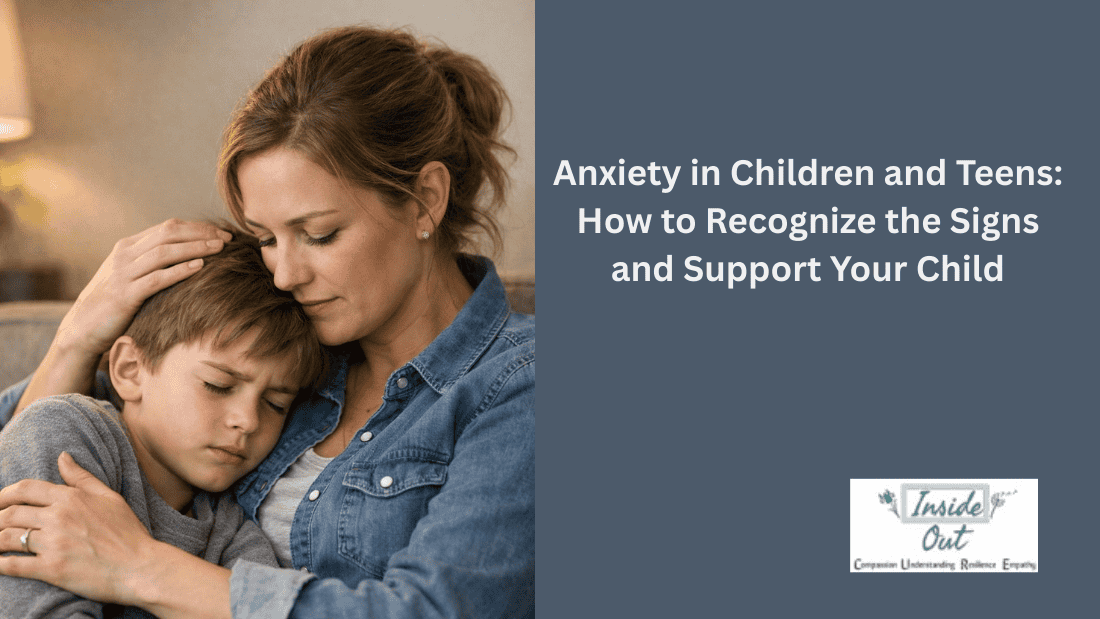
Anxiety in children and teens is more common than many parents realize. While some worry is developmentally normal, persistent anxiety can interfere with school, friendships, sleep, and overall well-being. Understanding the signs early, and knowing how to respond, can make a meaningful difference.
What Does Anxiety Look Like in Children and Teens?
Anxiety doesn’t always look like fear. In children and adolescents, it often shows up as:
- Frequent stomachaches or headaches
- Avoidance of school or activities
- Irritability or emotional outbursts
- Difficulty sleeping
- Excessive reassurance-seeking
- Perfectionism or fear of making mistakes
Teens may also experience:
- Social withdrawal
- Panic symptoms
- Sudden drop in academic performance
- Physical complaints with no medical cause
Why Anxiety Is Increasing in Youth
Modern stressors – including academic pressure, social media, global uncertainty, and post-pandemic changes – have significantly impacted youth mental health. Children today are navigating adult-level stress without adult-level coping tools.
How Parents Can Support an Anxious Child
- Validate feelings without reinforcing fear
- Create predictable routines
- Model calm regulation
- Encourage gradual exposure, not avoidance
- Teach coping skills like breathing and grounding
When anxiety begins to disrupt daily life, working with a child psychiatrist can provide clarity, tools, and relief for the entire family.
When to Seek Professional Support
If anxiety is persistent, escalating, or affecting school, friendships, or family life, a child psychiatrist can help assess emotional, behavioral, and developmental factors—and guide a personalized treatment plan.
Anxiety is treatable. With the right support, children and teens can build resilience, confidence, and emotional strength that lasts well beyond childhood.





Leave A Comment