
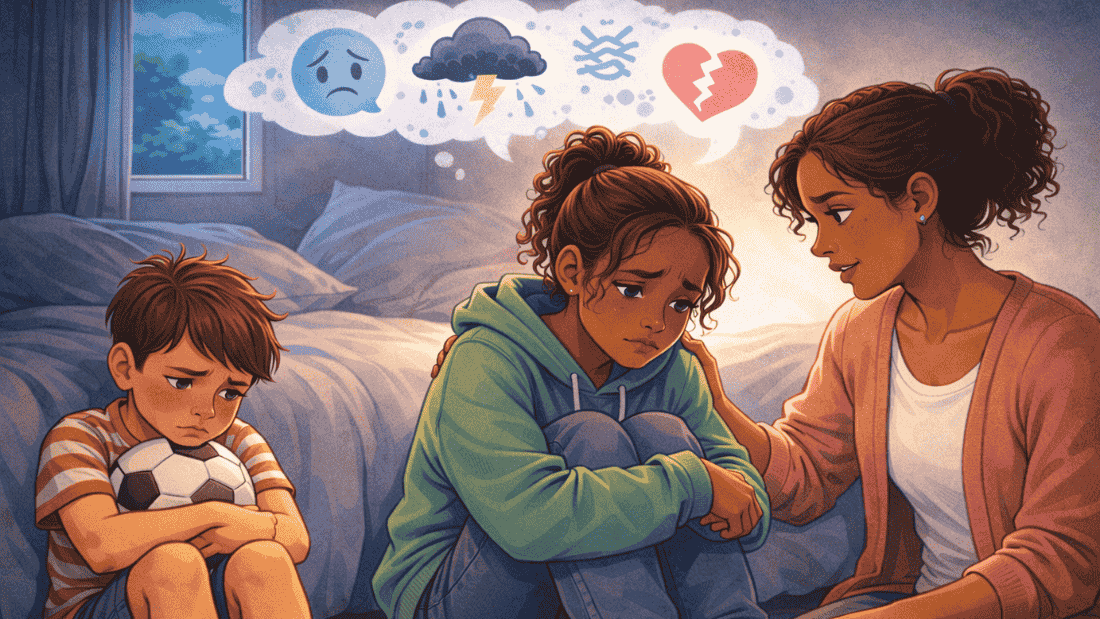
Depression in children and teens doesn’t always look like sadness. Often, it shows up as irritability, withdrawal, or physical complaints – making it harder for parents to recognize and address early.
How Depression Can Present in Youth
Children may experience:
- Increased irritability
- Loss of interest in play
- Frequent physical complaints
- Changes in sleep or appetite
Teens may experience:
- Emotional numbness
- Social withdrawal
- Academic decline
- Feelings of hopelessness or worthlessness
Depression in youth is real, valid, and treatable.
Why Depression in Youth Is Often Missed
- Symptoms are mistaken for “attitude” or normal adolescence
- Teens may hide emotional pain
- Emotional distress may appear as anger rather than sadness
How Parents Can Offer Support
- Listen without minimizing
- Avoid quick fixes or lectures
- Encourage open communication
- Seek professional guidance when symptoms persist
A child psychiatrist can assess emotional, behavioral, and environmental factors to create an effective treatment plan.
When to Seek Immediate Help
If a child or teen expresses hopelessness, talks about self-harm, or shows drastic behavioral changes, professional support should be sought immediately.
Depression does not define a child or teen. With timely care and support, healing is possible.





Leave A Comment